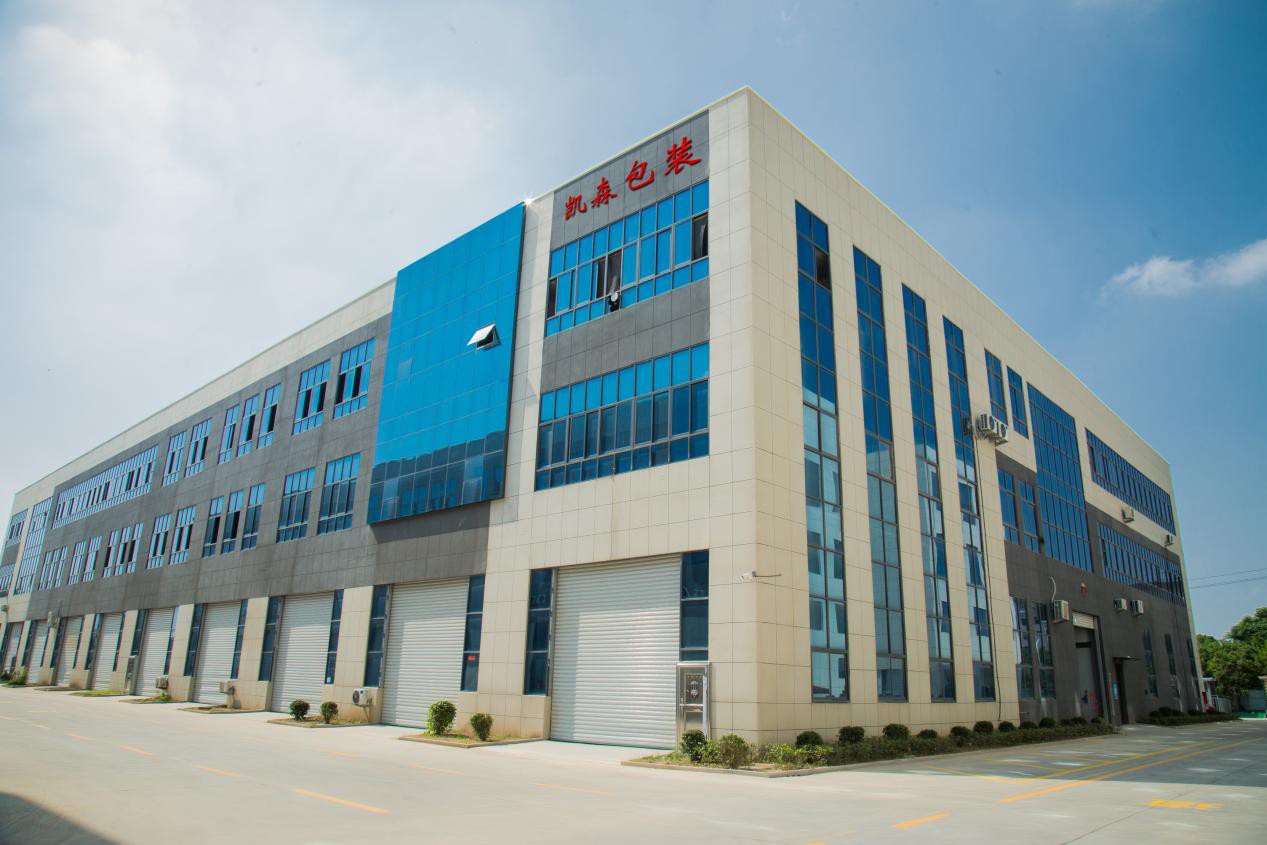
In the era of green and sustainable development, non-woven bags have become an indispensable part of daily life and commercial activities, replacing traditional plastic bags with their environmental friendliness and durability. As a professional packaging solution provider, Shandong Kaisen Packaging has long been committed to the R&D, production and innovation of non-woven products, including non-woven bags, non-woven vest bags, and non-woven shopping bags. Today, we will take you deep into the technical fundamentals and core principles behind these environmentally friendly packaging products, helping you understand their unique advantages and production logic.
1. Core Material: What is Non-Woven Fabric?
To understand the technology of non-woven bags, we first need to clarify the core material - non-woven fabric, also known as non-woven cloth. Unlike traditional woven or knitted fabrics, non-woven fabric is a kind of porous material made of polymer fibers (such as polypropylene PP, polyester PET, etc.) through physical or chemical methods, without spinning and weaving processes. This special manufacturing method gives non-woven fabric the characteristics of light weight, breathability, water resistance, and recyclability, laying a solid foundation for the production of non-woven bags, non-woven vest bags, and non-woven shopping bags.
Shandong Kaisen Packaging strictly selects high-quality polypropylene fibers as the main raw material for non-woven fabrics. Polypropylene has the advantages of low density, high strength, good chemical stability, and easy degradation, which ensures that the produced non-woven bags have excellent load-bearing capacity and environmental performance, and can meet the needs of different scenarios such as daily shopping, corporate promotions, and commodity packaging.

2. Key Production Technology of Non-Woven Bags
The production process of non-woven bags, non-woven vest bags, and non-woven shopping bags involves multiple core technologies, from the formation of non-woven fabric to the final bag making, every link is closely related to the quality and performance of the product. Shandong Kaisen Packaging has optimized and upgraded the production process based on years of experience, forming a set of efficient and stable production systems.

The formation of non-woven fabric is the first step in the production of non-woven bags. Currently, the most widely used technologies in the industry are spunbond technology and meltblown technology. Shandong Kaisen Packaging mainly adopts spunbond technology for the production of non-woven bags and non-woven shopping bags, and combines meltblown technology for products that require higher filtration performance.
Spunbond technology principle: First, the polypropylene granules are melted at a high temperature (about 230°C) in the extruder. The melted polymer is extruded through the spinneret to form continuous filaments. Then, the filaments are stretched by high-speed hot air to make them thinner and have higher strength. Finally, the stretched filaments are evenly laid on the conveyor belt to form a fiber web, and the fiber web is consolidated into non-woven fabric through thermal bonding or chemical bonding. This kind of spunbond non-woven fabric has high strength, good toughness, and excellent wear resistance, which is very suitable for making non-woven vest bags and non-woven shopping bags that need to bear a certain weight.
2.2 Bag Making Technology: Heat Sealing & Cutting
After the non-woven fabric is formed, it enters the bag making process, which is the key link to shape non-woven bags, non-woven vest bags, and non-woven shopping bags. Shandong Kaisen Packaging uses automatic bag making machines to realize the integration of cutting, heat sealing, and edge trimming, which greatly improves production efficiency and product consistency.
Heat sealing principle: Non-woven fabric is a thermoplastic material. When heated to a certain temperature (about 160-180°C), the surface fibers will melt. Under a certain pressure, the melted fibers of two layers of non-woven fabric will fuse together. After cooling, they will form a firm seal. Different from sewing, heat sealing has the advantages of fast speed, good airtightness, and no needle holes, which can ensure that the non-woven bag does not leak when carrying items.
For non-woven vest bags, the bag making machine will specially cut and shape the handle part. The handle of the vest bag is integrated with the bag body, which is formed by folding and heat sealing the upper part of the non-woven fabric. This design not only simplifies the production process but also makes the handle have higher bearing capacity, which is convenient for users to carry. For non-woven shopping bags, according to different needs, processes such as gusset adding, bottom pasting, and handle reinforcement can be added to improve the practicality and beauty of the bag.


3. Technical Advantages of Shandong Kaisen Non-Woven Bags
Based on advanced production technology and strict quality control, the non-woven bags, non-woven vest bags, and non-woven shopping bags produced by Shandong Kaisen Packaging have obvious technical advantages:
High Strength & Durability: Adopting high-quality spunbond non-woven fabric and optimized heat sealing technology, the bag body has strong tear resistance and load-bearing capacity. The non-woven shopping bag can easily bear 5-10kg of items, and the service life is much longer than that of traditional plastic bags.
Environmental Protection & Recyclability: The main raw material is polypropylene, which is a recyclable polymer material. The non-woven bag can be degraded naturally under certain conditions (such as composting environment) after being discarded, without causing long-term pollution to the environment. At the same time, Shandong Kaisen Packaging also supports the production of non-woven bags made of recycled fibers, further reducing the consumption of resources.
Customization & Versatility: Relying on advanced bag making equipment and technology, it can realize the customization of non-woven bags of different sizes, colors, and patterns. Whether it is a non-woven vest bag for supermarket shopping, a non-woven shopping bag for corporate promotion, or a non-woven bag for commodity packaging, it can be customized according to the needs of customers. In addition, non-woven bags can also be processed through additional processes such as printing, laminating, and waterproofing to expand their application scenarios.